About this destination
Discover Vairankode Vela
At a glance
Why this place stands out
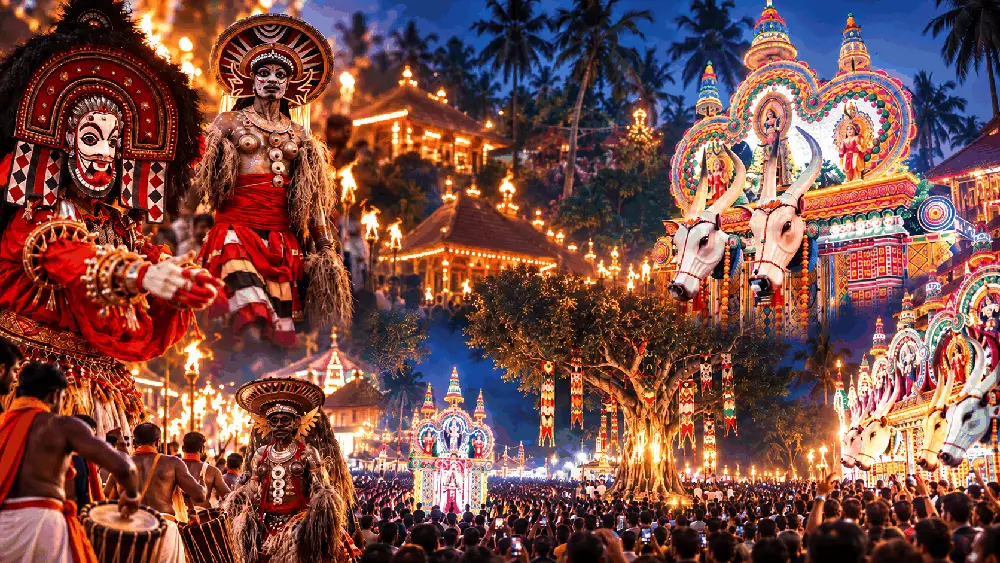
Vairankode Vela is a traditional annual festival of Sree Vairankode Bhagavathy Temple in Malappuram, celebrated during Kumbham with spectacular Eratta Kaala bull effigies, Poothan and Thira performances, village processions, percussion, a traditional festival market and the dramatic Kanalattam fire ritual.
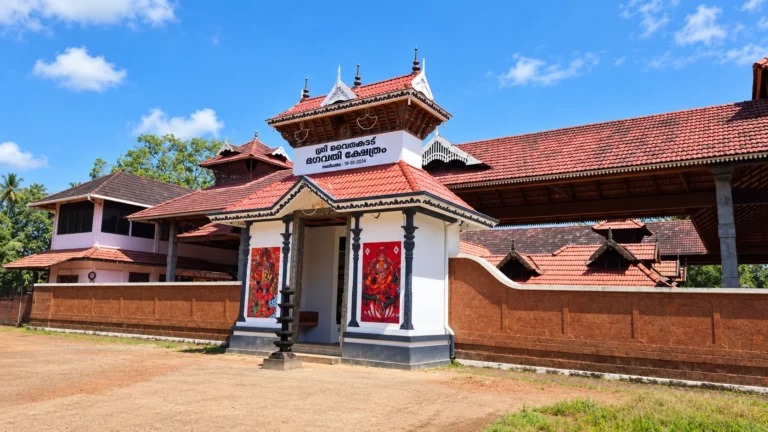
Vairankode Vela is one of the distinctive traditional temple festivals of the Malabar region of Keralam. The celebration takes place at the ancient Sree Vairankode Bhagavathy Temple, where Goddess Bhadrakali is worshipped as the presiding deity.
The official temple records describe the shrine as one of Keralam's old Bhadrakali temples and state that, according to temple tradition, it was established by the Azhvanchery Thamprakkal around 1,500 years ago. Local legend associates the deity with Kodungallur Bhagavathy and says that the goddess came across the Bharathappuzha to the region before being established at Vairankode. This should be presented as temple tradition and legend, rather than as an archaeologically established date.
The annual Theeyattulsavam is held during Kumbham, generally falling in February. Keralam Tourism records it as an annual festival, traditionally extending through a multi-day ritual cycle.
Festival Experience
The festivities traditionally begin with Maram Muri, a ritual involving the cutting of an offered jackfruit tree. The wood is prepared for the fire associated with the later Kanalattam ceremony.
Cheriya Theeyattu takes place during the earlier part of the festival cycle, while Valiya Theeyattu forms the grand concluding celebration. Processions arrive from surrounding villages carrying folk performers, decorated structures and traditional symbols.
The main cultural attractions include:
- Eratta Kaala – enormous decorated twin-bull or bullock effigies carried as part of village processions.
- Poothan and Thira – ritual folk traditions closely associated with Bhagavathy worship in South Malabar and neighbouring regions.
- Kattalan performances and other traditional costumed characters.
- Pulikali and regional folk performances appearing in festival processions.
- Traditional percussion and village processions, with groups arriving from neighbouring areas.
- Kanalattam, the dramatic fire ritual performed toward the concluding part of the festival.
- A traditional temporary festival marketplace selling local produce, pottery, household crafts, snacks, sweets and other rural goods.
- A notable freshwater fish market, historically forming part of the festival-ground trading tradition.
- Unlike many of Keralam's large temple festivals, Vairankode Vela is widely documented for not using elephants in its processions, with bull effigies and folk traditions instead forming much of its visual identity.
Keralam Tourism also documents Maram Muri, Cheriya Thiyyattu, Valiya Thiyyattu, Kanalattam and processions as principal components of the festival.
Cultural Importance
Vairankode Vela offers visitors an opportunity to experience a form of Keralam festival culture that remains strongly connected to village life, folk traditions and the agricultural landscape of Malabar.
Instead of being centred around large elephant processions, much of its visual character comes from village groups, folk performers, elaborate costumes, percussion and the spectacular Eratta Kaala effigies.
The festival ground also functions as a traditional gathering and trading space. Descriptions associated with Vairankode festival photographs document stalls selling pottery, bamboo and palm products, rural household items, food and sweets, together with a freshwater fish market that attracts traders and visitors from surrounding areas.
History & Legend
According to the temple's own history, Sree Vairankode Bhagavathy Temple was founded under the patronage of the Azhvanchery Thamprakkal, an historically important Namboodiri family associated with the region.
Temple tradition holds that the goddess worshipped here is connected with Kodungallur Bhagavathy and that she crossed the Bharathappuzha before being established at Vairankode.
The association of the festival with the Azhvanchery tradition continues in its ceremonial practices. Historical accounts of the festival describe processions arriving from Athavanad and the traditional involvement of representatives associated with the Thamprakkal in festival rituals.