Destination guide
Discover Sree Vairankode Bhagavathy Temple
At a glance
Why this place stands out
Sree Vairankode Bhagavathy Temple is an ancient Bhadrakali shrine at Vairankode near Thirunavaya in Malappuram district, traditionally associated with the Azhvanchery Thamprakkal. The temple is famous for the annual six-day Vairankode Vela or Theeyattulsavam held during the Malayalam month of Kumbham. Major attractions include the Maram Muri opening ritual, Cheriya and Valiya Vela celebrations, Eratta Kaala decorated twin-bull effigies, Poothan and Thira folk performances, traditional drumming and the Kanalattam fire ritual. Unlike many major temple festivals in Keralam, Vairankode Vela is notable for having no elephant procession.
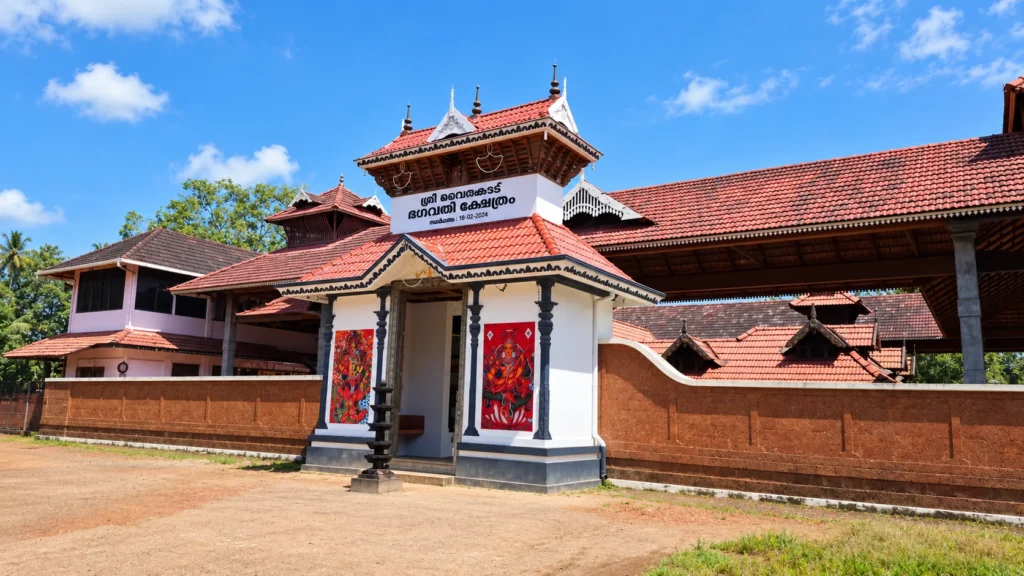
Sree Vairankode Bhagavathy Temple, located at Vairankode near Thirunavaya in Malappuram district, is one of the region’s culturally significant Bhadrakali shrines. Temple tradition places its origins around 1,500 years ago and associates its establishment with the Azhvanchery Thamprakkal, a historically influential family of the Malabar region.
The presiding deity is Bhagavathy in the form of Bhadrakali. According to local tradition, the Goddess of Vairankode is regarded as the sister of Kodungallur Bhagavathy. This belief forms an important part of the temple’s spiritual identity and links the shrine with the wider Bhagavathy worship traditions of Keralam.
A distinctive custom of Sree Vairankode Bhagavathy Temple concerns the Azhvanchery Thamprakkal. Traditional belief holds that the Goddess would rise in respect if the Thamprakkal entered the shrine. Because of this, the hereditary patrons traditionally do not enter the temple directly. Their ceremonial and administrative responsibilities are carried out through a representative known as the Koima, who continues to hold an important role in festival-related rituals.
The temple is most famous for the annual Vairankode Vela, also known as Theeyattulsavam. The festival is observed during the Malayalam month of Kumbham, generally falling in February, and extends over six days. It is one of the most colourful rural temple festivals of Malappuram and attracts large numbers of devotees and visitors from surrounding regions.
The festival begins with the traditional Maram Muri ritual. A jackfruit tree offered for the occasion is ceremonially cut, and its wood is later used for the festival fire associated with the concluding rituals. The celebrations gradually build from the smaller observance known as Cheriya Vela or Cheriya Theeyattu to the much larger Valiya Vela or Valiya Theeyattu, which forms the grand climax of the festival.
One of the most remarkable features of Vairankode Vela is the absence of elephant processions. Unlike many major temple festivals in Keralam, the celebrations here depend on human participation, traditional village processions, ritual performance and agrarian symbolism.
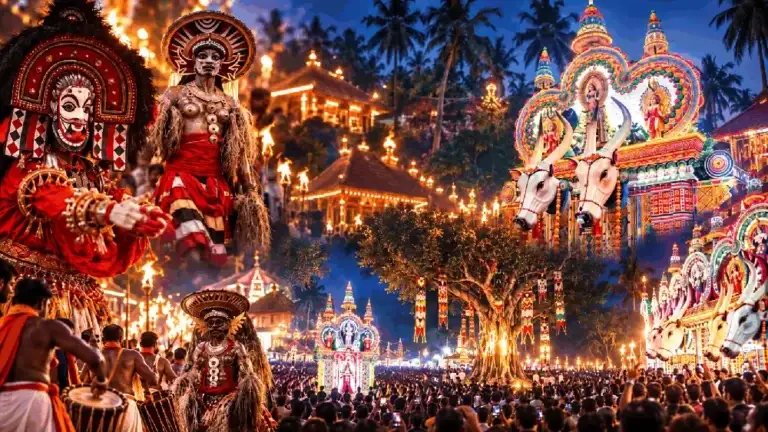
Among the most striking sights are the Eratta Kaala, enormous and brightly decorated twin-bull effigies carried in procession by groups of villagers. The bull forms reflect the agricultural heritage of the surrounding communities and are traditionally associated with prayers for prosperity, fertility and a successful agricultural season.
The festival grounds also become an important stage for traditional folk arts. Performances such as Poothan and Thira, with elaborate costumes and large ceremonial headgear, bring dramatic colour and movement to the celebration. Other traditional forms, including Kattalan and Pulikali, may also be seen as village groups arrive with percussion, costumes and processional displays.
The soundscape of Vairankode during the festival is dominated by powerful traditional drum ensembles. The combination of percussion, ritual movement, illuminated festival structures, folk performers and large crowds creates an intense atmosphere that reflects the living village culture of Malabar.
Another major ritual associated with the festival is Kanalattam, in which devotees take part in a fire-related act of faith involving glowing embers. The ritual is among the most visually dramatic moments of the festival and forms part of the devotional traditions connected with Bhagavathy worship.
During Vairankode Vela, the area surrounding the temple develops into a large traditional fair. Temporary stalls, local products, food vendors, agricultural goods and other forms of rural trade become part of the festival environment, giving the celebration the character of both a religious gathering and a community marketplace.
Beyond the festival season, Sree Vairankode Bhagavathy Temple remains an important place of worship for local devotees. Its long-standing association with the Azhvanchery Thamprakkal, its unusual hereditary customs and its connection with one of Malappuram’s most distinctive folk festivals make it an important destination for visitors interested in the religious traditions and cultural heritage of northern Keralam.
Vairankode is located near Thirunavaya and Tirur. Tirur Railway Station is the nearest major railway hub, while smaller railway stations including Tirunnavaya provide closer local access depending on train availability. Visitors coming specifically for Vairankode Vela should expect heavy crowds during the main festival days and should check the current year’s festival dates and temple arrangements before travelling.
As an active place of worship, visitors are expected to follow temple customs, dress respectfully and behave appropriately within the temple premises. For travellers exploring Malappuram’s living traditions, Sree Vairankode Bhagavathy Temple offers a rare combination of spirituality, folk culture, agrarian heritage and spectacular community celebration.